
Vinyl Plank, Laminate or Hybrid: Choosing a Floor That Lasts
They look the same on the shelf and they don't behave the same on your floor
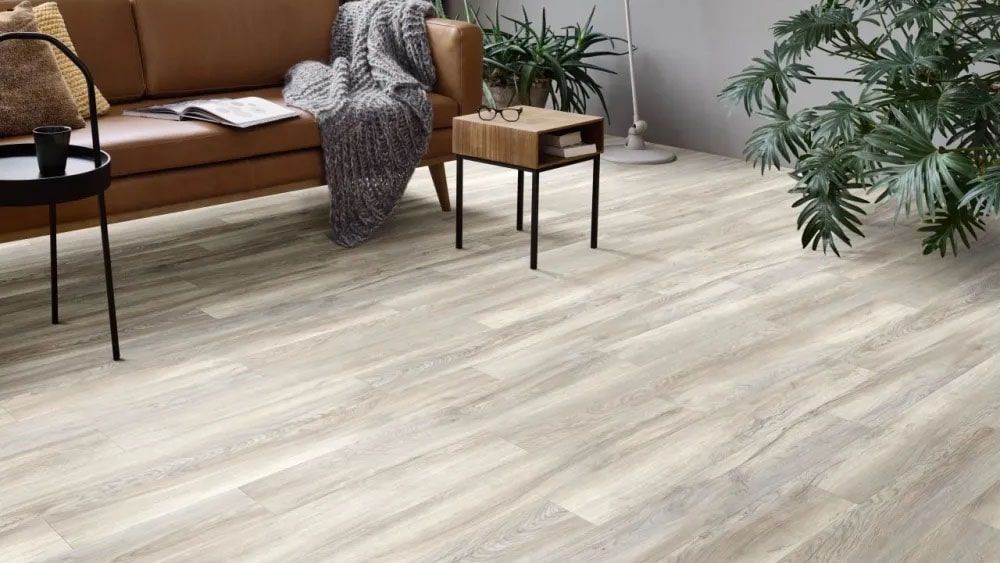
Walk into any flooring showroom, ours included, and you will find three products that look almost identical from standing height and behave very differently once they are down. Vinyl plank, laminate and hybrid all give you a timber look without the price or the maintenance of solid timber. Where they differ is water, wear and warmth.
The marketing does not help. Almost everything in this category is described as waterproof, hard wearing and suitable for the whole house, and none of that is precise enough to choose with. Here is what the differences actually mean in a Marlborough home.
The three products, briefly
Luxury vinyl plank, or LVP. A plank made of layered PVC with a printed design layer and a clear wear layer on top. Flexible, quiet, warm underfoot, and fully water resistant as a material.
Laminate. A plank with a high density fibreboard core, a printed decorative layer and a tough melamine wear surface. Very hard and very scratch resistant. The core is wood based, which is where its water vulnerability lives.
Hybrid, usually SPC or WPC. A rigid core plank that sits between the two. SPC means stone polymer composite, with a limestone and PVC core. WPC means wood polymer composite, with a foamed core that is softer and warmer. Both are dimensionally stable and water resistant, and both are stiffer than LVP.
We stock vinyl planks and sheet vinyl, along with laminate and timber ranges including Pergo, so this is a comparison we work through with customers most weeks.
Water is the real dividing line
This is where most buying mistakes happen, because the word waterproof gets used for three different things.
- A waterproof material means the plank itself will not swell or delaminate if it gets wet. LVP and SPC qualify. Standard laminate does not, because the fibreboard core absorbs water and swells permanently.
- A waterproof surface means water sitting on top will not get through the plank. Most products in all three categories manage this.
- A waterproof floor means the water cannot get down through the joins to the subfloor. Almost nothing in plank format achieves this without additional detailing, because every click join is a potential path when water sits long enough.
That distinction matters in practice. A vinyl plank floor in a kitchen will shrug off a spilt glass of water and a mopped floor indefinitely. A slow dishwasher leak that runs for three weeks under the planks is a different problem, and it is a subfloor problem rather than a plank problem.
Some laminate ranges are now specifically rated for wet areas, with sealed cores and treated joins. They exist and they are good. The important thing is that this is a property of the specific range, not of laminate as a category, so ask about the product in front of you rather than the material.
For a full bathroom or laundry, sheet vinyl is still the most water resistant option we sell, because a continuous sheet coved up the wall gives you no joins to worry about at all. It is less fashionable than plank and it is more reliable.
Wear layers, and why the number matters
For vinyl plank and hybrid, the single most useful specification is the wear layer thickness. It is the clear top layer that takes all the traffic, and it is usually quoted in mils or microns.
A thin wear layer will look excellent for a while and then start to dull and show scratching in traffic lanes. A thicker wear layer costs more and lasts considerably longer. For a busy family hallway, an entry, or any commercial space, a heavier wear layer is the upgrade worth paying for, ahead of a nicer visual.
Laminate is graded differently, using an abrasion class, and the honest position is that good laminate is more scratch resistant than most vinyl. If your main concern is dog claws, dragged chairs and grit, laminate has the harder surface. If your main concern is water, vinyl or hybrid has the better core.
That is the real trade off in this category, and it is worth stating plainly. Laminate wins on hardness. Vinyl and hybrid win on water.
Sunlight, and why it matters here more than most places
Blenheim gets a lot of sun, and sun affects these floors in two ways.
- Fading. The design layer sits under the wear layer and can fade with prolonged UV exposure. Quality products have UV inhibitors. Cheap ones fade unevenly, and you notice it as a pale band where the sun tracks across the floor.
- Expansion. All of these products expand and contract with temperature, and dark coloured planks in direct sun get hot. This is the most common cause of a floating floor lifting, peaking or gapping. The fix is not the product, it is the installation. Correct expansion gaps at every perimeter and at doorways, and no fixing the floor down where it needs to move.
If you have a large area of glass facing north or west, tell us at the quoting stage. It changes what we recommend and how we detail the installation.
Underfloor heating
All three can be compatible with underfloor heating, but the compatibility is product specific and the temperature limits are real. Most systems specify a maximum floor surface temperature, commonly around 27 degrees, and exceeding it can cause problems ranging from gapping to adhesive failure.
If you have or are planning underfloor heating, that needs to be on the table before you choose a product. Bring the heating system details along with the room dimensions.
Comfort, noise and feel
An underrated part of this decision.
- Vinyl plank is the quietest and warmest underfoot. It is flexible and it has some give, which makes it comfortable to stand on in a kitchen and quieter to walk on.
- Laminate is the hardest and loudest. That hollow click when you walk on a laminate floor is real, and a good acoustic underlay reduces it considerably but does not remove it.
- Hybrid sits in between. SPC is harder and colder than WPC. WPC is softer and warmer but slightly less dent resistant.
For an upstairs room, or an apartment, or any space where noise transmission matters, this becomes a leading consideration rather than a footnote.
What the subfloor decides
Here is the part no one wants to hear. With this whole category, the subfloor determines the outcome more than the product does.
These are thin floors. Rigid core products in particular telegraph unevenness, and a floor laid over a subfloor that is out of tolerance will feel wrong, click, or wear unevenly no matter how good the plank is. Older Marlborough homes frequently need levelling work, and concrete slabs need to be checked for moisture before anything goes down over them.
That is why our measure and quote includes a subfloor assessment, and why a quote that does not mention preparation is not really comparable to one that does.
Come and walk on them
There is a limit to how much of this translates on a screen. All three feel different underfoot, sound different, and look different under real light rather than showroom light.
Come into our High Street showroom in Blenheim, stand on the samples, and bring a photo of the room along with rough dimensions. Have a look at our vinyl range and timber and laminate options first, check the current specials, then get in touch for a free measure and quote.